I noticed her right away — how could I not? Every week, she had her hair done in the salon on the second floor — a crown of waves in the most extraordinary color, somewhere between apricot and strawberry. Peach Melba, I called it in my mind. She was always in full makeup, impeccably dressed. She had her own full-time attendant. She moved through the corridors of the Hebrew Home in her power wheelchair like a woman who had never once in her life gone unattended.
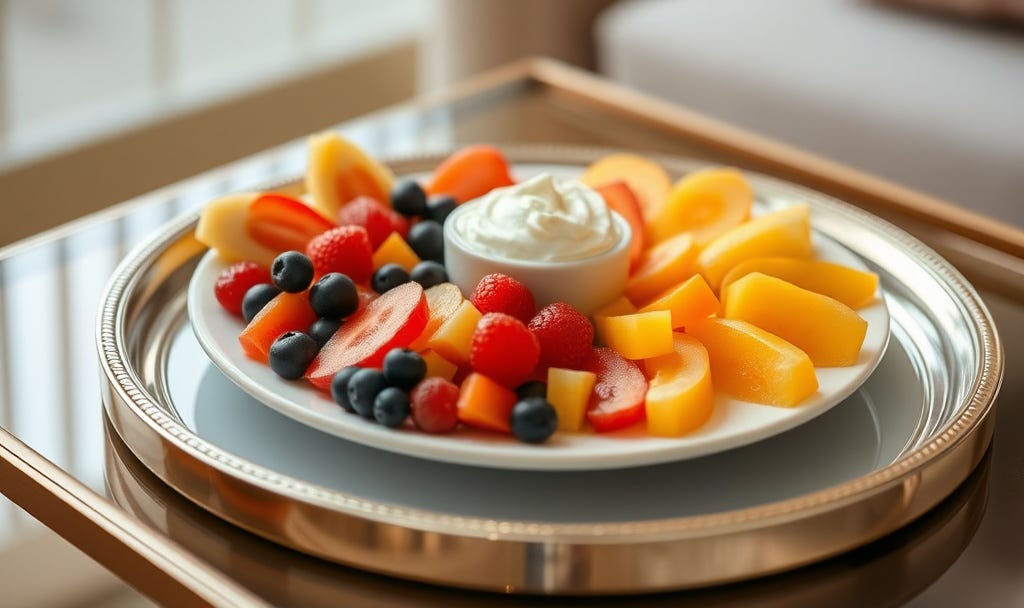
The first time we spoke, in the lounge area on the corner where Dad’s room was, my husband was with me. “I came here as a young woman,” she told us. “An illness. I couldn’t walk.” She paused, her hands still in her lap. “In those days, this place was like a country club. You would order the cottage cheese and fruit and they would bring you a platter — a huge platter. Fresh. A mound of cottage cheese and real fruit. Melon and berries and pineapple.” She looked down the corridor, seeing something I couldn’t see. “Now it’s a little plastic container of wet fruit salad. And a little plastic container of cottage cheese.”
“An aristocrat,” my husband said in the car, driving home. He was right.
The next time it was winter when she stopped me in the hallway.
“Your father tells me you write about angels,” she said. Her accent was German, with a light trill — the accent of another world, another century.
“I do,” I said.
“Do you have a moment? Might we talk awhile?”
We went to the sunny alcove and she told me a story — something that happened years earlier. Something that mattered deeply to her. It’s not my story to share.
After that, every time she saw me in the hallway, she reached for my hand and squeezed it.
“Thank you,” she said. Every time. Just that. And every time, I knelt beside her wheelchair and we exchanged a hug.
This is a scene from The End of Men, a book about my Dad and me.
Previous: White Pigeon
Next: Boom
Scene Index: here.
Want to support the work? Leave a comment. Share a chapter with a friend. To receive the scenes by email, subscribe here.